

It's easy to agree with statements like "the food we buy in supermarkets should be safe to eat." After all, who wants go to bat for shoddy growers pushing contaminated lettuce, or distributors sending out botulinum-laced fish and meats?
I've written elsewhere about the relative lack of a "safety culture" in the software industry compared with industries like civil aviation or even food. (Remember: most of the food recalls and alerts that are issued today are voluntary.) But there's also a decades-long track record of the government taking a hard stand on lax food safety practices at growers and distributors, including hefty fines and criminal prosecutions in the case of violations that cause public harm.
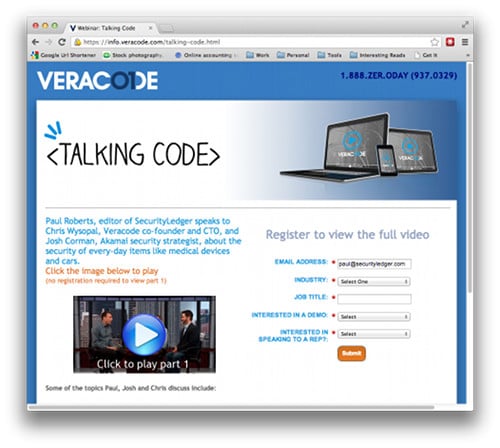
How do we get that level of accountability in the software industry? That's the topic of the latest installment of The Security Ledger's Talking Code, sponsored by Veracode. In this segment, Chris Wysopal, Joshua Corman and I talk about where the responsibility of securing software lies - with vendors, their customers, or someone else?
Simply taking a vendor's word for it when it comes to assessing the security of a software product is a recipe for disaster. Like any other challenge, software buyers need to "trust" their suppliers, but also "verify" that what they're saying is true. But how? Joshua Corman, the Director of Security Intelligence at Akamai, notes that some large technology buyers are beginning to work language about security quality into their standard IT purchasing agreements. That's a small step in the right direction...but it is a start.


